
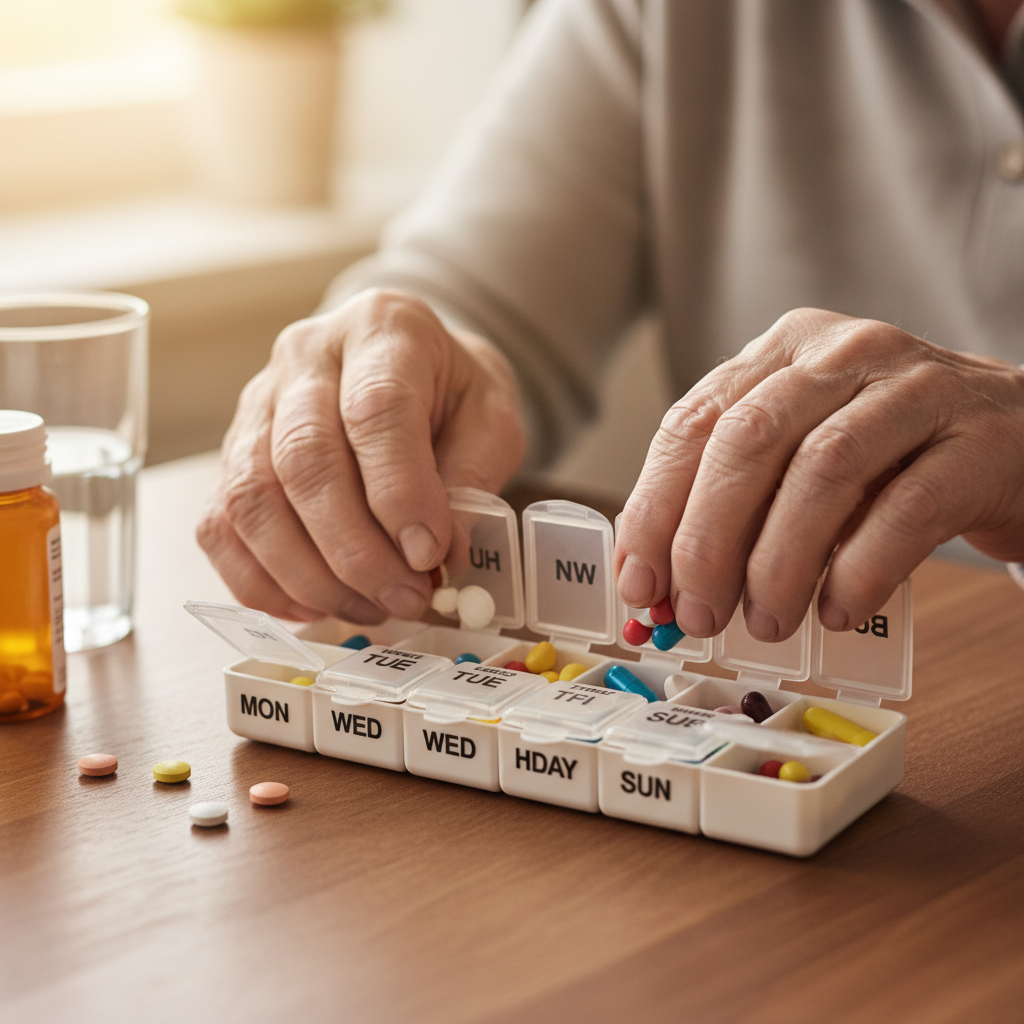
The night everything changed.
It was 2:17 a.m. when the ambulance lights came through the venetian blinds — that particular blue-white strobe that turns a familiar living room into something unrecognizable. My mother had fallen getting up for water. I had been asleep twenty minutes away, certain she was fine, because she'd always been fine.The paramedics were efficient and kind. They asked me questions I didn't know the answers to. What medications is she on? Does she have a cardiologist? When was her last bone density scan? I stood in the hallway in socks, holding her insurance card, feeling like I'd failed a test I hadn't known I was taking.
Dr. Patel — follow up Friday
Ask about PT referral
Call insurance re: home aide
Get list of her meds — ALL of them
(she won't remember)
Scrawled in the ER waiting room
The wheel, reinvented every day.
In the weeks that followed, I became a different kind of expert — not the kind that knows things, but the kind that learns them urgently, at 11 p.m., from whatever page Google surfaces first. How to talk to a discharge nurse. How to set up a bathroom for someone with limited balance. How to have the conversation about driving.
I found fragments everywhere: a Reddit thread, a PDF from 2009, a pamphlet from a hospital I'd never been to. Nothing was written for me. Everything assumed either a medical background or complete ignorance. I was somewhere in the middle, moving fast, making it up.
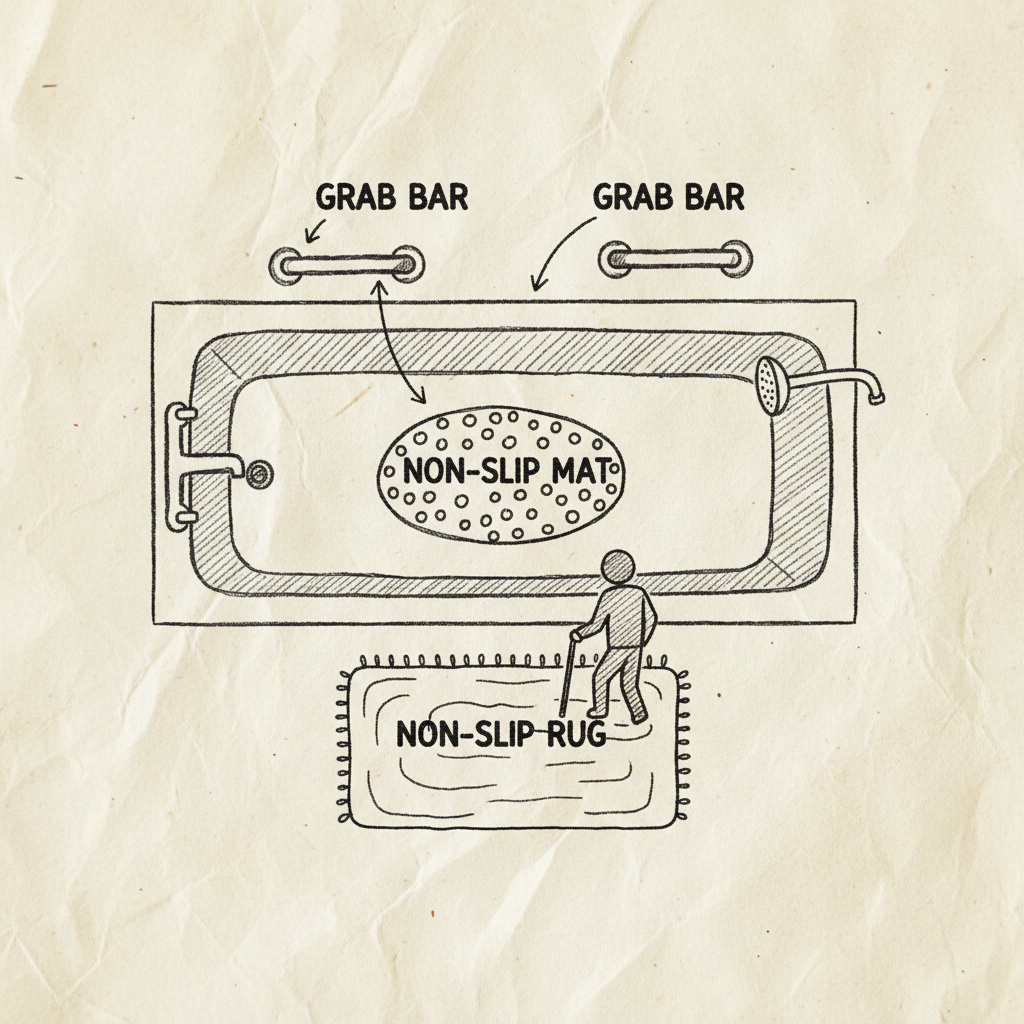
Bathroom safety sketch, Week 3
You become capable of more than you think.
Six months in, I could change a wound dressing without flinching. I knew which questions to ask before a specialist appointment, and which answers to write down versus which to trust myself to remember. I'd learned to read a medication chart the way I once learned to read a map — slowly at first, then fluently.
None of this made it easy. But it made it possible. And I kept thinking: why did I have to learn all of this alone? Why isn't there a place where someone who's done this sits down and writes it out — not clinically, not condescendingly, but the way a friend writes a note to leave on your counter?
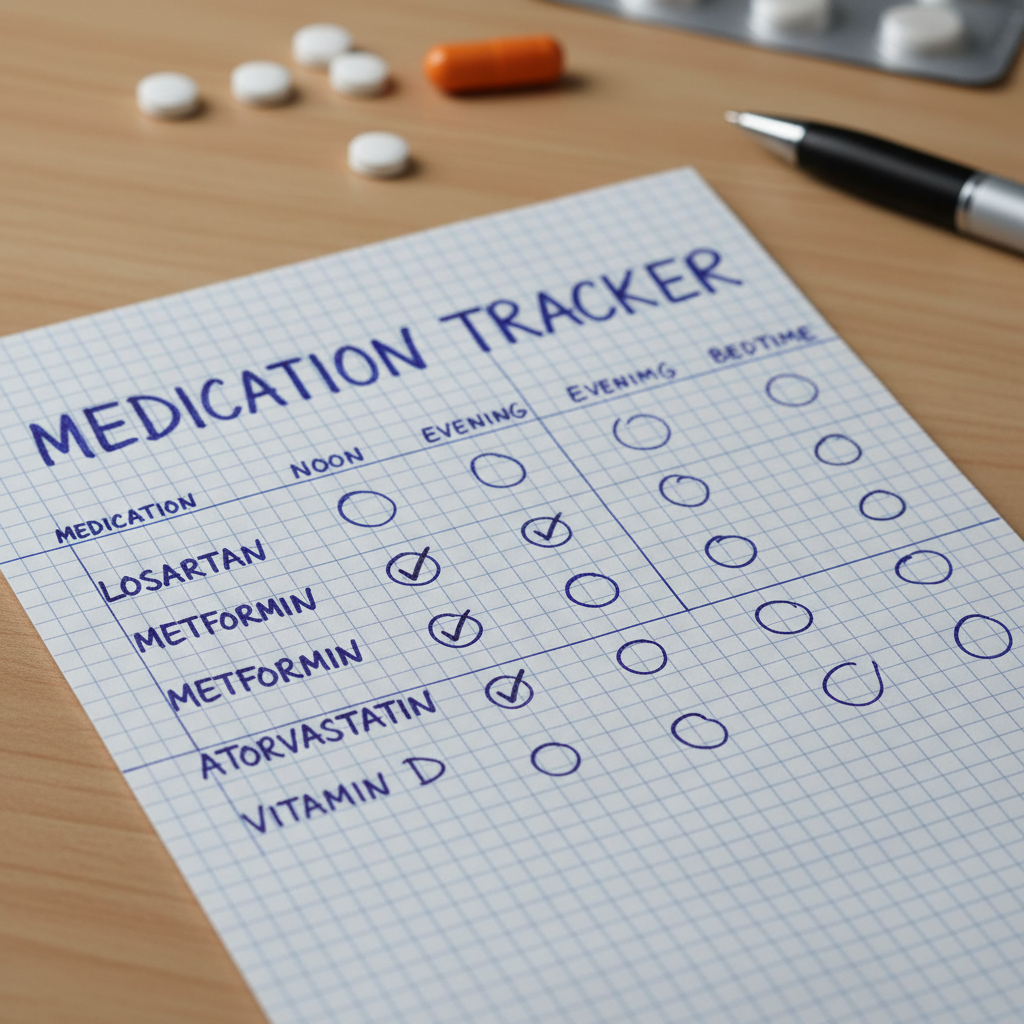
The medication chart that finally worked
So we wrote it down.
Tend exists because caregiving is common and guidance is rare. Because the people who know the most — the hospice nurses who've sat with hundreds of families, the geriatric social workers who've navigated every system — rarely have a place to share what they know in plain language, to the person who needs it most. We are those people. We've lived these articles before we wrote them. And we built this for you — the person Googling at midnight, the one who didn't know they'd become a caregiver until they already were.

The people behind Tend
This is where you come in.
Tend is a collection of essays for people doing what you're doing. Written by those who've been there. Leave your name and we'll send them when they're ready.
Dr. Patel — follow up Friday
Ask about PT referral
Call insurance re: home aide
Get list of her meds — ALL of them
(she won't remember)
Scrawled in the ER waiting room